
Omega-6 fatty acids could profit liver fats and stiffness.
Final up to date on December twenty seventh, 2024

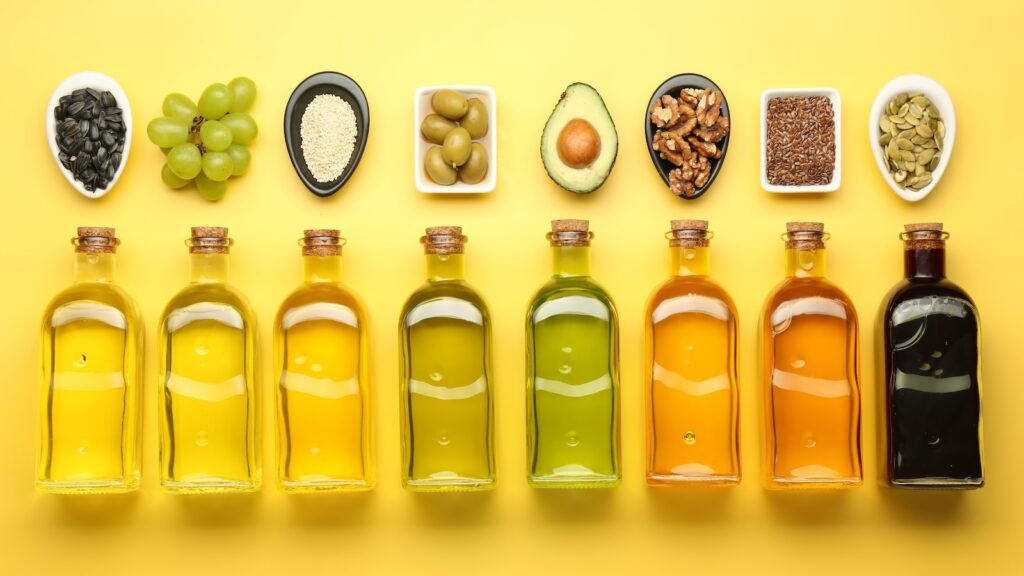
Seed oils like sunflower, linseed, grapeseed, and canola are vegetable oils extracted from plant seeds. They’re extensively used for cooking and varied different functions. Nevertheless, some argue that seed oils will not be helpful, evaluating their manufacturing course of to that of motor oil.
Dr. Layne Norton, a PhD in Dietary Sciences, delved into the research-backed well being advantages of seed oils in late December 2024.
[Related: Best Whey Isolate Protein Powders]
Research Dissection
A current research revealed within the British Journal of Diet examined people with non-alcoholic fatty liver illness and in contrast the effectiveness of three remedy approaches: (1)
- The Normal of Care: Authorities dietary pointers on limiting sugar-rich foods, rising polyunsaturated (PUFAs) and monounsaturated (MUFAs) fatty acids consumption, and lowering saturated fatty acids (SFAs) to advertise a healthier diet.
- 5:2 Food regimen (e.g., intermittent fasting)
- Low-Carb, Excessive-Fats Food regimen
All of the diets aimed to supply roughly 1,900 calories per day for males and 1,600 energy for ladies. The low-carb, high-fat eating regimen comprised 50% to 80% fats, 10% to 40% protein, and minimal carbohydrates. Following the 5:2 eating regimen, feminine individuals consumed 500 energy; males consumed 600 energy on two designated days every week. On the remaining 5 days, feminine individuals consumed 2,000 energy, whereas male individuals consumed 2,400 energy.
Researchers collected blood samples and analyzed plasma fatty acid content material to trace adjustments in liver fats primarily based on the proportion of saturated (SFA), monounsaturated (MUFA), and polyunsaturated (PUFA) fat within the individuals’ diets.
Outcomes
After twelve weeks, researchers analyzed the individuals’ liver stiffness and fats content material adjustments. Whereas there have been minimal variations between the three teams general, the research discovered a hyperlink between adjustments in liver stiffness fats content material and particular fatty acid concentrations. Notably, larger dietary consumption of saturated fat was related to smaller reductions in liver fats and stiffness. Regardless of this, all teams skilled enhancements attributable to weight loss and reductions in physique mass index (BMI).
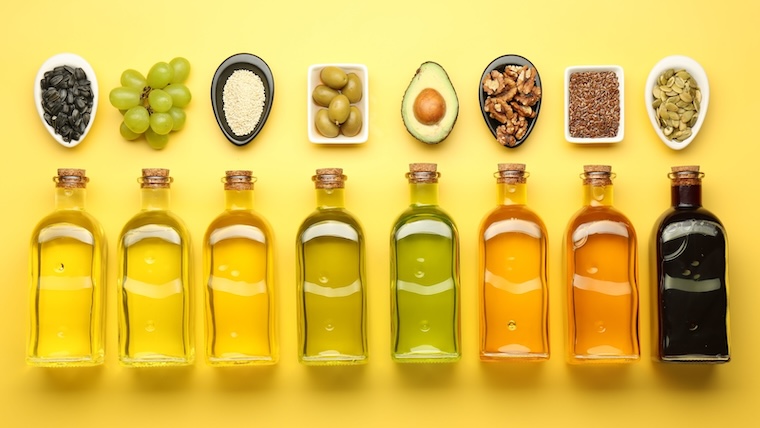
Individuals who consumed extra saturated fats or had elevated plasma ranges of saturated fats confirmed much less enchancment than those that consumed extra unsaturated fat. This was notably evident with omega-6 polyunsaturated fatty acids (PUFAs), particularly alpha-linolenic acid (ALA), demonstrating the strongest affiliation with diminished liver stiffness and fats content material. These helpful fat are generally present in seed oils.
Considerably, whereas the enhancements throughout all teams had been primarily attributed to weight reduction, researchers adjusted for adjustments in BMI to make sure the findings weren’t solely attributable to weight discount. Even after accounting for BMI variations, the associations with omega-6 PUFAs and ALA endured, as did the connection with saturated fat. This underscores particular fatty acids’ function in bettering liver well being.
Take Dwelling
Arguing that seed oils are dangerous primarily based solely on their manufacturing course of is in the end irrelevant. “It doesn’t matter how one thing’s made; what issues is whether or not it has optimistic or destructive results on the factor we’re measuring,” Dr. Norton defined.
Omega-6 PUFAs profit liver fats and stiffness in people with non-alcoholic fatty liver illness, particularly when in comparison with the results of saturated fat.
Considerations About Omega-6
Some argue that omega-6 fatty acids in seed oils can oxidize and turn out to be rancid, probably resulting in inflammation and the manufacturing of free radicals within the physique.
Dr. Norton referenced 4 research the place individuals consumed PUFAs from seed oils, resembling alpha-linolenic acid, as a substitute of saturated fat, with outcomes that confirmed no dangerous results on metabolic health or irritation. The outcomes had been both impartial or helpful. (2)(3)(4)(5)
Extra In Analysis
References
- Tillander, V., Holmer, M., Hagström, H., Petersson, S., Brismar, T. B., Stål, P., & Lindqvist, C. (2024). Associations between dietary fatty acid and plasma fatty acid composition in non-alcoholic fatty liver illness: secondary evaluation from a randomised trial with a hypoenergetic low-carbohydrate high-fat and intermittent fasting eating regimen. The British journal of vitamin, 132(4), 1–13. Advance on-line publication. https://doi.org/10.1017/S0007114524001673
- Mozaffarian, D., Micha, R., & Wallace, S. (2010). Results on coronary coronary heart illness of accelerating polyunsaturated fats rather than saturated fats: a scientific evaluate and meta-analysis of randomized managed trials. PLoS medication, 7(3), e1000252. https://doi.org/10.1371/journal.pmed.1000252
- Masson, C. J., & Mensink, R. P. (2011). Exchanging saturated fatty acids for (n-6) polyunsaturated fatty acids in a blended meal could lower postprandial lipemia and markers of irritation and endothelial exercise in obese males. The Journal of vitamin, 141(5), 816–821. https://doi.org/10.3945/jn.110.136432
- Pigsborg, Ok., Gürdeniz, G., Rangel-Huerta, O. D., Holven, Ok. B., Dragsted, L. O., & Ulven, S. M. (2022). Results of fixing from a eating regimen with saturated fats to a eating regimen with n-6 polyunsaturated fats on the serum metabolome in relation to heart problems danger elements. European journal of vitamin, 61(4), 2079–2089. https://doi.org/10.1007/s00394-021-02796-6
- Bjermo, H., Iggman, D., Kullberg, J., Dahlman, I., Johansson, L., Persson, L., Berglund, J., Pulkki, Ok., Basu, S., Uusitupa, M., Rudling, M., Arner, P., Cederholm, T., Ahlström, H., & Risérus, U. (2012). Results of n-6 PUFAs in contrast with SFAs on liver fats, lipoproteins, and irritation in stomach weight problems: a randomized managed trial. The American journal of scientific vitamin, 95(5), 1003–1012. https://doi.org/10.3945/ajcn.111.030114
Featured picture by way of Shutterstock/New Africa