
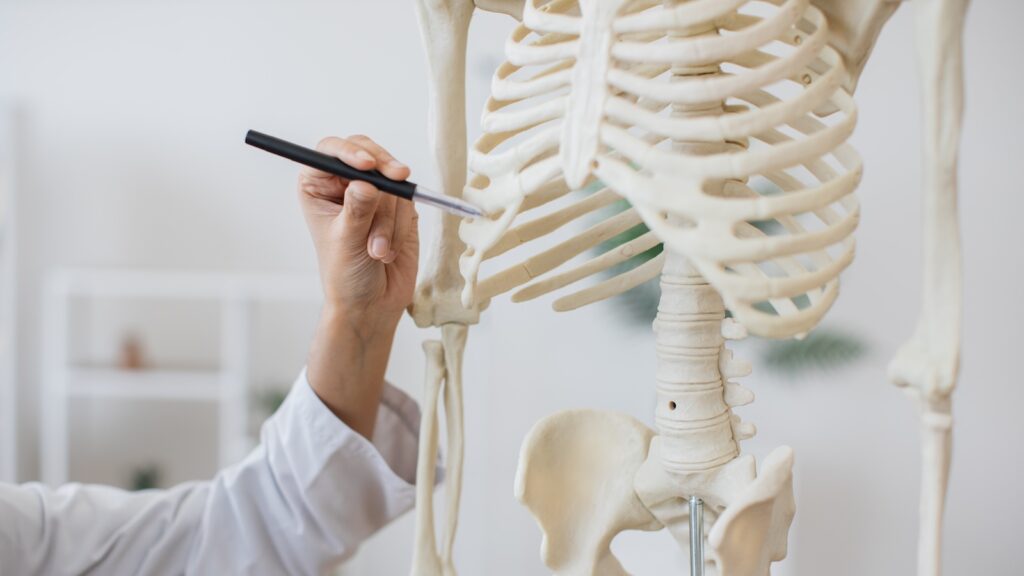
A balanced diet and resistance training are important for sustaining general well being. They supply vitamins wanted for bodily capabilities whereas enhancing power for on a regular basis actions. One profit is their position in supporting bone well being.
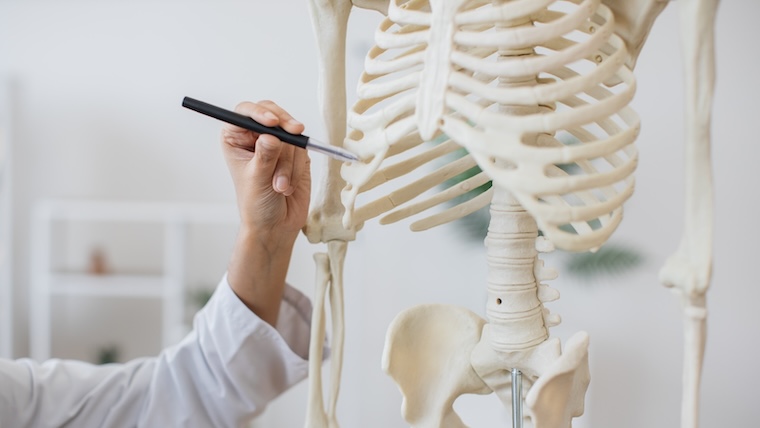
Jonathan Bennion, a doctor assistant, anatomist, and director at the Institute of Human Anatomy, just lately explored the intricate connection between food plan, train, and bone well being. Via an in depth dissection of bone anatomy, Bennion revealed how correct diet and common bodily exercise are essential for preserving bones sturdy and wholesome.
Your bones are consistently increase new bone tissue and in addition breaking down outdated bone tissue.
—Jonathan Bennion
Bone tissue is a residing, dynamic construction that’s consistently evolving and present process transforming.
[Related: What Should You Drink to Stay Legit Hydrated]
Compact Bone
Bennion defined that the outer layer of bone, referred to as the “compact bone,” is a dense exterior present in all bones. Regardless of its density, it may be comparatively skinny on the ends of bones and isn’t solely strong.
On a microscopic stage, compact bone reveals a surprisingly porous construction. It includes a complicated community of interconnected canals that home blood vessels and repeating round items known as osteons. These osteons are aligned parallel to the size of the bone, offering vital power and sturdiness.
Analyzing an osteon reveals concentric rings of strong, exhausting bone tissue. Inside these rings lie embedded cells known as osteocytes, liable for sustaining bone well being by exchanging vitamins and waste merchandise with the blood. Since osteocytes are encased inside inflexible bone tissue, how do they distribute vitamins and take away waste?
Bennion defined that on the heart of every osteon lies a central canal containing blood vessels. Earlier than the bone hardens and traps the osteocytes in place, these cells lengthen cytoplasmic projections — tiny “arms” that join with neighboring osteocytes in the identical ring and adjoining rings. This intricate mobile community varieties a pathway to move vitamins effectively, waste, and different necessities.
Extracellular Matrix
Bennion referred to the dense bone tissue forming the round plates of bone because the extracellular matrix. This matrix offers bone distinctive properties, combining power with a contact of flexibility.
Collagen and Hydroxyapatite
A more in-depth take a look at the extracellular matrix reveals that bone includes collagen and hydroxyapatite, a exceptional, crystal-like substance. This mineral offers bone distinctive properties and distinctive power, enabling it to resist compression and crushing.
Hydroxyapatite is fashioned from calcium phosphate and hydroxide, making calcium important for bone well being. Its important position lies in producing hydroxyapatite, which ensures the resilience and sturdiness of our bones.
Vitamin D is required to soak up calcium.
—Jonathan Bennion
Bennion highlights that collagen isn’t simply useful for the pores and skin; it’s additionally probably the most ample protein within the human physique and performs a vital position in bone construction. (1) This protein fiber gives exceptional tensile power, serving to bones resist being pulled aside. Wholesome bones are composed of roughly 30% collagen and 55% hydroxyapatite, a mineral that reinforces bone hardness.
Sustaining the precise steadiness between collagen and hydroxyapatite is important, as any imbalance can result in particular bone-related situations. As an illustration, rickets and osteomalacia (delicate bones) come up from a vitamin D deficiency, which hinders calcium absorption.
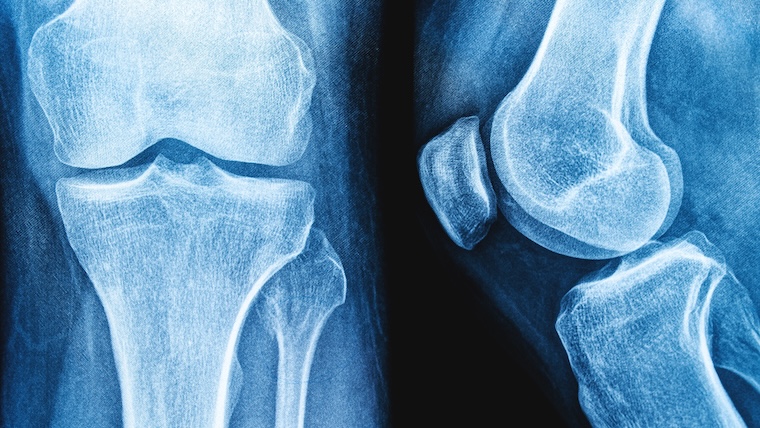
This leads to extra collagen relative to hydroxyapatite, inflicting bones to change into smoother, bent, or deformed. Conversely, osteogenesis imperfecta happens when the physique fails to correctly synthesize collagen, resulting in brittle, fragile bones vulnerable to fractures.
Spongy Bone
Beneath the compact bone lies spongy bone, an intricate and extremely organized construction of tiny, beam-like formations known as trabeculae. These trabeculae create small interconnected areas the place blood vessels weave out and in, bringing vitamins near the bone cells that kind the beams.
Nestled inside these areas is pink bone marrow, a significant tissue liable for producing pink blood cells (erythrocytes), white blood cells (lymphocytes), and platelets (thrombocytes). Blood vessels passing by way of the pink bone marrow gather these newly fashioned blood cells and distribute them all through the physique.
In adults, pink bone marrow is primarily discovered within the axial skeleton, together with the cranium, backbone, sternum, rib cage, and pelvis, in addition to within the proximal ends of the humerus and femur.
Although the association of spongy bone might seem random at first look, it’s meticulously aligned to resist the particular stress forces the bone experiences, showcasing its exceptional design and performance. “Primarily, we’ve got this marvelous organic structure designed inside our bones. It’s unimaginable,” Bennion acknowledged.
Train and Bone Well being
Bennion defined the roles of two key cells in bone well being: osteoclasts and osteoblasts. Osteoclasts break down and reabsorb outdated bone tissue, whereas osteoblasts create new bone tissue by depositing extracellular matrix. Over time, this matrix calcifies, trapping the osteoblasts and reworking them into osteocytes.
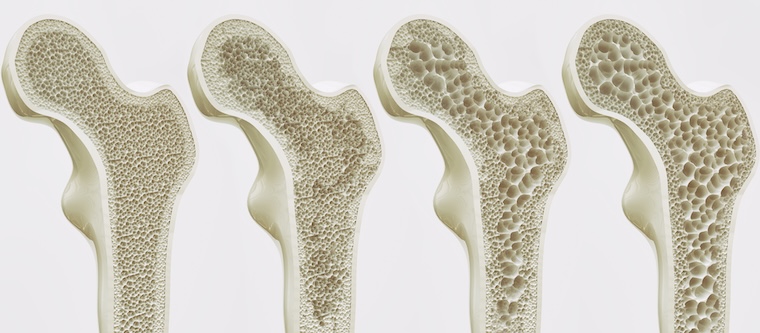
When osteoblast exercise matches that of osteoclasts, bone density stays secure. Nonetheless, as we age, bone density naturally declines. Partaking in workout routines, significantly resistance coaching, can stimulate osteoblasts to work extra actively than osteoclasts, resulting in elevated bone density and stronger bones.
This is likely one of the the reason why train is nice for long-term bone well being, particularly once we begin to hit our 30s.
—Jonathan Bennion
Bone density peaks in a single’s 30s and declines thereafter. Nonetheless, this course of might be slowed by way of influence actions and resistance coaching, alongside sustaining a food plan wealthy in calcium and vitamin D. (2)
Sadly, ladies are about eight instances extra doubtless than males to develop osteoporosis, a situation characterised by a big loss in bone density, significantly after menopause.
This elevated danger is because of estrogen’s position in defending bones by inhibiting osteoclasts — cells liable for breaking down bone tissue. When estrogen ranges drop throughout menopause, osteoclast exercise will increase, resulting in larger bone resorption and decreased density, particularly in spongy bone. Partaking in common train might help mitigate this development. (3)
Though osteoporosis is much less frequent in males, it may possibly nonetheless happen. Testosterone, like estrogen, protects bone well being, however its ranges regularly decline with age, growing the danger over time.
Wrap Up
Resistance coaching and correct diet change into important for sustaining wholesome bones as we age. A well-rounded food plan ought to embody calcium, vitamin D, vitamin Okay, magnesium, omega-3 fatty acids, and key macronutrients to assist bone power. Common train helps sluggish the lack of bone density and reduces the danger of creating frequent bone-related situations later in life.
Extra In Analysis
References
- Wu M, Cronin Okay, Crane JS. Biochemistry, Collagen Synthesis. [Updated 2023 Sep 4]. In: StatPearls [Internet]. Treasure Island (FL): StatPearls Publishing; 2025 Jan-. Accessible from: https://www.ncbi.nlm.nih.gov/books/NBK507709/
- Dawson-Hughes, B., Harris, S. S., Krall, E. A., & Dallal, G. E. (1997). Impact of calcium and vitamin D supplementation on bone density in women and men 65 years of age or older. The New England journal of medication, 337(10), 670–676. https://doi.org/10.1056/NEJM199709043371003
- Nguyen, T. V., Sambrook, P. N., & Eisman, J. A. (1998). Bone loss, bodily exercise, and weight change in aged ladies: the Dubbo Osteoporosis Epidemiology Research. Journal of bone and mineral analysis: the official journal of the American Society for Bone and Mineral Analysis, 13(9), 1458–1467. https://doi.org/10.1359/jbmr.1998.13.9.1458
Featured picture through Shutterstock/SofikoS