
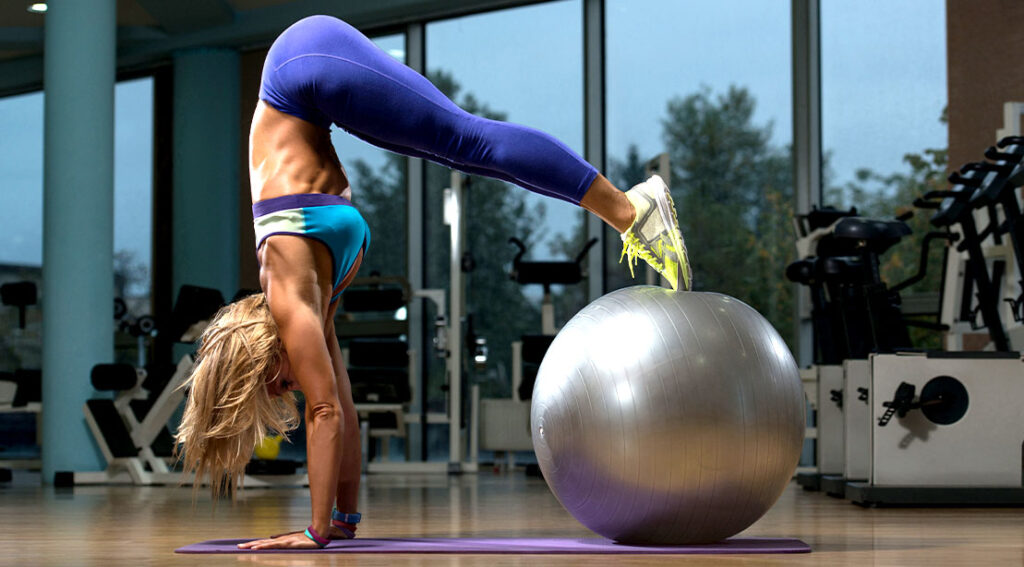
Many lifters get the fallacious thought relating to strengthening the core. They carry out infinite crunches or planks that go away them staring on the flooring. Whereas those exercises have their place, they often miss the core issue. A robust core isn’t simply in regards to the six-pack; it’s about stability and the power to generate and resist motion, which issues most.
Enter the steadiness ball pike. This dynamic train challenges your core power and checks your stability, coordination, and adaptability in methods few core-focused actions can. Whether or not you’re a seasoned lifter or seeking to step up your core sport, the steadiness ball pike has one thing to supply all people.
Able to sculpt a core that’s as useful as it’s sturdy? Let’s clarify why the steadiness ball pike deserves a starring position in your exercises.
What’s the Stability Ball Pike?
The steadiness ball pike is a difficult train that blends core power, stability, and adaptability. Image this: you’re in a plank place together with your shins balanced on a stability ball whereas within the plank place, and you then roll the ball towards your palms by lifting your hips right into a pike place.
Sounds easy? Suppose once more.
At its core (pun meant), the steadiness ball pike trains your core to withstand undesirable motion whereas creating movement. Out of your shoulders to your toes, all the things is concerned. In the event you’re searching for an train that mixes power and management with a touch of humility, the steadiness ball pike checks all these bins and extra.
How To Do The Stability Ball Pike
Good type is essential to attaining the steadiness ball pike’s advantages. Observe these step-by-step directions to make sure you get probably the most out of this improbable train.
- Begin in a pushup plank together with your palms below your shoulders, arms straight, and legs prolonged behind you.
- Place your shins on prime of a stability ball, guaranteeing your physique varieties a straight line from head to heels.
- Brace your core such as you’re about to be punched within the tummy.
- Then, elevate your hips towards the ceiling by rolling the steadiness ball towards your palms. Create a “V” form together with your physique, preserving your legs straight and your ft on the ball.
- Slowly decrease again to the plank place by rolling the ball away out of your palms, reset, and repeat.
Frequent Errors and Fixes
The steadiness ball pike is a improbable train, however to get probably the most out of it, you need to listen and keep away from these widespread pitfalls.
You’re Dropping Your Hips
The Drawback: Sagging hips shift the main target away out of your core and place pointless pressure in your decrease again.
The Repair: Concentrate on bracing your core by pondering somebody will punch you there and squeezing your glutes. In case your hips preserve sagging, cut back the vary of movement or strive a regression till you construct extra core power.
You’re Arching Your Decrease Again
The Drawback: An arched decrease again means your core isn’t absolutely operational, which reduces the advantages and makes your decrease again very sad.
The Repair: Earlier than beginning, tuck your pelvis barely to keep up a impartial backbone. Preserve this as you carry out and return from the pike. In the event you really feel your again arching, pause, reset, and give attention to a spread of movement you may management.
You’re Dashing Via the Train
The Drawback: Rushing by way of the pike will get this difficult train over and achieved sooner, but it surely reduces management and permits momentum to take over, minimizing muscular rigidity.
The Repair: What the hurry? Decelerate. Concentrate on managed actions when rolling the ball in and returning to the plank. Keep in mind, it is a core power train and never a race.
You’re Off Stability
The Drawback: Wobbling or falling off the ball signifies an absence of core bracing or improper set-up.
The Repair: First, take note of your setup and guarantee you will have the correct-sized ball. Begin with a lowered ROM or apply holding a plank on the ball earlier than progressing to the pike.
Advantages of The Stability Ball Pike
The steadiness ball pike delivers severe advantages that transcend aesthetics, and right here’s why it deserves a spot in your exercises.
Enhanced Core Energy
This train is all about enhancing core stability. It strengthens the deep core stabilizers, just like the transverse abdominis, whereas additionally focusing on the hip flexors, rectus abdominis, and obliques. The outcome? A core that’s all present and go.
Improved Stability and Coordination
Balancing on a stability ball whereas performing the pike strengthens your hip and shoulder stabilizer muscle groups. This interprets to raised total stability and coordination out and in of the fitness center.
Higher Flexibility and Mobility
As you roll into the pike, your hamstrings and hip flexors are put by way of a managed stretch. Over time, this improves flexibility and mobility, which is a win for anybody seeking to transfer and really feel higher.
Strengthened Shoulder Stability
Supporting your weight within the plank place whereas balancing on the steadiness ball challenges your shoulders to stabilize all through the pike, including one other layer of higher physique power.
Programming Strategies
I wish to program the steadiness ball pike in two methods, and each contain doing it earlier than you hit the iron.
Core Triset Exercise Instance
Pair it with different anti-extension and rotational core workout routines like planks, and Pallof presses for a complete core exercise earlier than hitting the weights
Stability Ball Pike: 2 units of 8-10 reps
Respiratory Facet Plank: 2 units of three to five breaths per aspect
Deadbug: 2 units of 6 reps per aspect
Warmup
Incorporate the pike into your warm-up to get up your core and enhance focus for heavier lifts.
Reps and Units
Newbie: Begin with 2-3 units of 5-8 reps, specializing in good type.
Superior: Progress to 3-4 units of 10-12 reps, or enhance the depth by slowing the motion or pausing within the pike place for a number of seconds.