
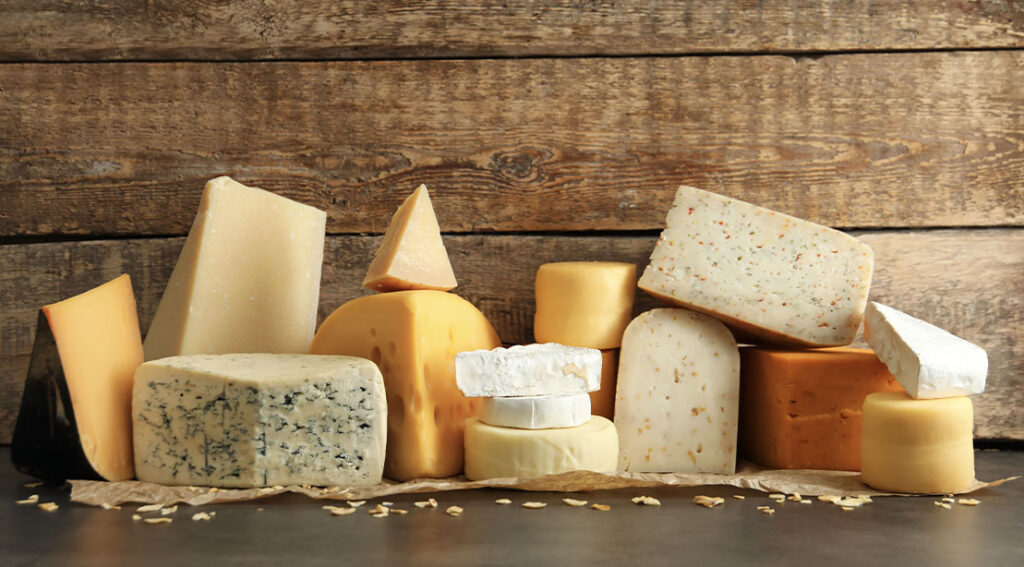
Cheese is wealthy and creamy, and that’s most of us love the stuff. A lot so, that the average American guy consumes nearly 42 pounds of the dairy product each year, an quantity that has been inching upwards in recent times. Sliced, shredded, melted, crumbled, or baked, we are able to’t get sufficient of it.
Cheese is a staple in cultures everywhere in the world, as earlier than industrialization and fridges, fermented dairy merchandise (cheese, kefir, yogurt) had been frequent methods to maintain dairy round for longer. Lately, there are literally thousands of varieties starting from reasonably pedestrian to actually funky.
As a lot as we love this dairy product, although, most of us are a little bit weary of that block of cheddar or oozy mozzarella. “Cheese is my weak spot” is perhaps the way in which you consider it as if you’re committing a dietary sin by digging into game-day nachos. It’s thought of extra of an indulgence than a well being meals. It’s simple to see why individuals would possibly really feel conflicted about this meals group. Sure, the assorted sorts might be dense in energy, fats, and salt. But it surely’s additionally a supply of protein, calcium, B nutritional vitamins, and different vitamins you need extra of. That makes it a problem to pigeonhole it into the wholesome or unhealthy class.
Fortunately, it seems as if cheese is one thing you’ll be able to be ok with consuming for well being and muscle, so long as you play by the foundations. Learn on for the cheese details it’s essential to know earlier than you make one other name to Domino’s.
How To Eat Cheese With out The Guilt
When you all the time need extra Parm in your pasta and might’t think about your turkey sandwich minus the slice of Swiss, know this: Modern-day analysis means that even full-fat cheese received’t essentially hurt your ticker or make your midriff extra delicate than stable.
Firstly, it seems that cheese doesn’t increase (or essentially cut back) your danger for a few of at the moment’s largest killers, reminiscent of coronary heart illness. This review of research even suggests that there could possibly be an inverse relationship between cheese consumption and coronary heart illness dying. A big meta-analysis of 15 research printed within the European Journal of Nutrition that checked out cheese’s influence on coronary heart illness discovered that individuals consuming probably the most (1.5 ounces per day) had a surprisingly 10% decrease danger than those that didn’t eat any. One motive is perhaps the influence it has on our ldl cholesterol.
In a six-week randomized clinical trial it was discovered that when individuals consumed full-fat cheddar cheese they didn’t expertise the identical rise in smaller LDL-cholesterol particles as they did when consuming the identical quantity of fats from butter. Small, dense LDL particles are believed to be extra strongly associated to heart problems danger than bigger particles.
Specialists have various theories about why cheese is perhaps extra benign than maybe butter or a slab of fatty steak. One thought that is sensible is that it has much more than its saturated fats content material – an oz. of cheddar has about 5 grams of saturated fats. For cheese, a vitamin matrix impact exists, the place completely different vitamins and compounds reminiscent of sphingolipids inside the meals work in live performance to supply a web optimistic (or, in any case extra of a impartial) well being influence and basically cancelling out the possibly deleterious results of saturated fats.
When milk is remodeled into cheese, the method alters the way in which the vitamins and different elements in it are chemically organized. This will have an effect on how cheese is digested and processed by the physique, which may result in various well being results which can be completely different from the consequences of consuming dairy in altered types, reminiscent of butter. All of us must be placing extra emphasis on whole meals and the way their vitamins, antioxidants, and different elements work together with one another.
Most of the research on cheese and well being use it in a non-melted kind, which is completely different than consuming cheese on pizza or in cooked dishes like lasagne. Although there’s some initial research to recommend that it is perhaps extra advantageous to eat un-melted cheese for coronary heart well being, it isn’t but totally recognized how melting impacts the general cheese matrix construction, and if this could alter the vitamin and well being influence. This may be good to know since a lot of the cheese in America is consumed in melted kind as is the case with pizza.
Let’s not overlook that when its made it might probably acquire some useful compounds, too. For example, Vitamin K2 can kind in the course of the fermentation course of and this more durable to search out type of the nutrient might be essential for cardiovascular well being. Simply don’t anticipate a lot in the way in which of vitamin Ok from Velveeta.
Totally different cheeses are made with several types of micro organism, which, largely, are chargeable for the distinctive flavors. These identical micro-critters might have useful results on our microbiome, which, in flip, may result in improved well being outcomes together with some aid from digestive considerations like irritable bowel illness. With this stated the influence of consuming cheese on the microbiome is but to be correctly studied. It’s not recognized should you get anyplace close to the focus of useful microorganisms from a slice of Gouda or blue cheese as you’d from a cup of yogurt.
Regardless of being a concentrated supply of energy, some research recommend you don’t have to skip cheese to maintain your six-pack properly stocked. In a single analysis paper, printed in The New England Journal of Medicine, researchers set out to determine which foods were linked to weight gain by following 120,877 women and men within the U.S. for 20 years, inspecting their weight each 4 years. Whereas they discovered that consuming extra of sure meals reminiscent of refined grains (good day, white bread) and sugary drinks was related to weight acquire, consuming extra of others, like nuts and fruits, helped with weight reduction.
Cheese wasn’t related to both acquire or loss, even for individuals who elevated the quantity of it they ate in the course of the research. One motive cheese might assist with weight management is that its protein and fats content material might assist average urge for food. Nonetheless, there’s a dearth of high quality analysis inspecting the influence that it has on physique composition and whether or not its supply issues. It’s probably solely problematic if it contributes to an extra of energy and is a part of ultra-processed meals at which level you have to be questioning how clever it was to order a second serving to.
And right here is a few superior information for cheese lovers! It could possibly assist you get extra buff. In a recent Journal of Nutrition study, 20 wholesome males took in 30 grams of protein supplied as cheese or milk protein focus following a bout of weight coaching to find out if there could be any variations within the price of post-training muscle protein synthesis. Regardless of there being greater peak concentrations of blood amino acids with the milk protein focus there was no distinction within the price of muscle-building between the cheese and milk protein powder.
This has been supported by different analysis displaying that cheese protein may also help with muscle-making efforts when mixed with resistance coaching. A single ounce serving of cheese has about 6 to eight grams of high-quality protein (most cheeses is greater in protein than saturated fats) that may definitely assist you pack on extra lean mass. Nonetheless, it’s possible you’ll not need to get 30 grams of protein solely from cheese after pumping iron. But it surely definitely generally is a vital a part of your post-training protein consumption, perhaps simply not all.
As you is perhaps all too conscious of, lactose, a naturally current sugar in milk, might be troublesome for some individuals to digest, resulting in digestive woes like fuel and bloating. Nonetheless, the micro organism used to make cheese digests many of the lactose within the milk. A lot of the remaining lactose is current within the whey, which is separated from the curds towards the top of the cheese-making course of and drained off. This implies many forms of cheese have little or no to no lactose and are secure to devour for delicate tummies. Typically, the upper in moisture a cheese is, the upper in lactose it’s. Which means more durable cheese like provolone or cheddar may have lower than cottage or ricotta cheese.
Which Cheeses To Keep away from
The place cheese can fall off the rails is when it’s a part of a eating regimen too wealthy in ultra-processed meals and contributes to an extra of energy, saturated fats, and sodium. Quick-food pizza, cheeseburgers, mac and cheese, and pizza pockets will not be the way in which that we must be getting our day by day vitamins. Sadly, that is precisely the way in which too many individuals are consuming the stuff. So when its a fixture of a 500-calorie slice of pizza or triple-decker burger it’s no surprise it’s typically thought of a dietary villain.
It’s additionally problematic after we devour extra processed merchandise than the true stuff. American cheese slices fall properly in need of precise cheddar, and Velveeta will not be the way in which you have to be dressing your broccoli. There’s a good likelihood that these merchandise don’t provide the identical dietary advantages of higher high quality cheese.
As for these cheese flavored merchandise on grocery store cabinets reminiscent of crackers and chips, these not often include any cheese and as a substitute depend on thriller cheese flavoring. Once more, not cheese.
For these watching their sodium consumption, sure sorts might be fairly salty. Some variations like feta, halloumi, Parmesan, and cotija are particularly salty. In case your eating regimen incorporates plenty of different salty meals, then including a few servings of cheese can push you excessive. When you’re consuming about an oz. or two a day and eat largely decrease salt complete meals, nonetheless, it’s not a giant concern. However there are some people like these with hypertension that will have to cut back their consumption of upper salt meals.

How To Select The Proper Cheese For Your Weight loss program
General, there’s no have to avoid cheese—until you’re getting largely hails from ultra-processed meals at which level it’s essential to revaluate how a lot you’re consuming and the place you’re getting it from. If all this (largely) optimistic information has you able to dig right into a wheel of Brie with a spoon, listed here are some tacky tidbits value understanding.
Watch Your Parts
To maintain saturated fats and energy in test, most guys ought to restrict their day by day portion of cheese to not more than 2 ounces, which is about 200 energy and 10-12 grams of saturated fats. Sure, that’s some powerful love. However most of us don’t know what this quantity appears like, which may result in portion distortion. A wise transfer is to weigh your parts for a number of days so you may get a way of how a lot you’re serving your self. A lot of the analysis suggesting a impartial or useful impact to consuming cheese concerned topics consuming roughly a mean of 1.5 ounces a day. Not the mega-amount you’ll get from a slice of deep-dish.
There’s No One Finest Alternative
The web is rife with articles concerning the healthiest cheese you should buy. However, reality be informed, any and all actual cheese is okay moderately and the vitamin content material doesn’t fluctuate significantly among the many varieties. There are a number of exceptions, like cottage cheese which is far greater in protein than different varieties, however then once more many people don’t contemplate this to be the identical as Camembert or Swiss are.
Be a Softy
Softer types of cheeses reminiscent of contemporary mozzarella, goat, and brie usually have fewer energy per ounce than more durable sorts like cheddar and Parmesan. That’s as a result of with extra moisture comes much less calorie density. So if you wish to get pleasure from a day by day cheese behavior but in addition hold calorie consumption extra on the down low then you’ll be able to gravitate towards these you’ll be able to reduce by way of with nearly zero effort. In any case, I’ve by no means met a salad that wasn’t made manner higher with a scattering of soppy goat cheese.
Swap it Out
There’s a giant distinction between grating some Parmesan over a salad and feasting on a greasy pepperoni pizza. In some research, the well being advantages of cheese had been discovered to be the best when it changed different much less useful meals like processed meats or refined grains. So you can swap out a few of the bacon for a bit of cheese and are available out forward. Not so by blanketing a bowl of white pasta with a bag of shredded three-cheese combine.
Add it to More healthy Meals
The easiest way to eat your cheese is to make use of it as a taste enhancer for nutritious meals. Add a number of chunks of feta to a veggie-rich salad, grate some aged cheddar over selfmade chili, drape a slice of contemporary mozzarella over a lean turkey burger, or mix ricotta right into a smoothie for added protein and to make it style additional decadent. Utilizing cheese to make these meals extra thrilling to eat will increase the probabilities you’ll eat greater quantities of wholesome meals and snacks. That’s a win-win.
Don’t Sack the Fats
Relating to selecting between low-fat and full-fat cheese, you needn’t accept the previous. Undeniably, full-fat cheese can be extra satisfying, each from a style and texture perspective, and many of the analysis suggesting cheese ain’t so dangerous for us has concerned topics consuming common cheese. Typically fillers are added to accommodate the shortage of fats in decrease fats cheese at which level you begin venturing additional away from what cheese must be. There’s additionally evidence that people tend to eat larger portions when selecting lower-fat (gentle) cheese, which may cancel out any calorie benefit.
So long as you aren’t going overboard on saturated fats consumption elsewhere in your eating regimen you’ll have room for the saturated fats you’ll get from a beneficiant grating for Pecorino Romano. With this stated, there’s nothing incorrect with choosing part-skim ricotta or mozzarella if you wish to cut back your calorie and saturated fats consumption. These even have a useful vitamin profile together with protein and micronutrients like calcium.
Imitation Is Not Flattery
Brief-cut cheese will not be the way in which to go. On the entire, you need to deal with consuming greater high quality cheeses made the way in which it must be. You’ll be able to learn ingredient labels of packageg and search for merchandise that include questionable gadgets like emulsifiers, cellulose, coloring, and modified corn starch, after which select to offer these a go. Seeing “cheese product” on the meals label ought to make you chop the cheese. Be aware that some American cheeses — the tremendous melty, yellow-sliced processed selection you liked on toasted bread as a equipment — is constructed from largely water, so it has fewer vitamins than different cheeses. Processed cheese meals slices are solely required to have a minimal of 51% cheese. Why accept much less?