
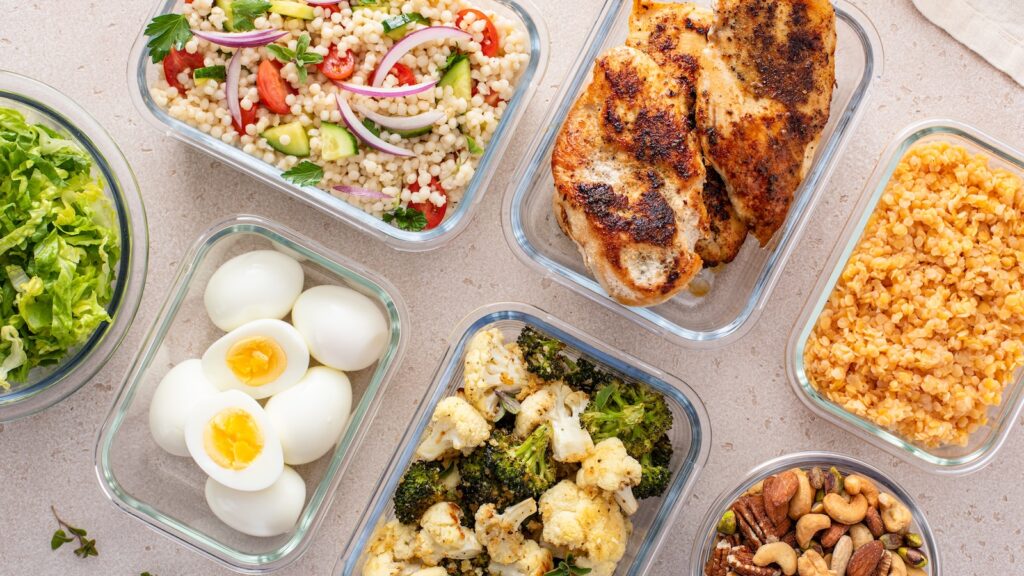
Dr. Milo Wolf suggests 0.8 to 1.3 grams of protein per pound of physique weight for muscle development.
Final up to date on December eleventh, 2024

The advisable dietary protein consumption for adults with minimal bodily exercise is 0.8 grams per kilogram (1.76 grams per pound) of physique weight per day. These with average exercise ranges are suggested to eat 1.3 grams per kilogram (2.87 grams per pound). People partaking in intense bodily exercise ought to purpose for 1.6 grams per kilogram (3.53 grams per pound). (1)
Many specialists agree that muscle growth is successfully supported inside this vary, with little proof suggesting additional advantages from exceeding it.
Nevertheless, rising analysis concerning protein consumption for muscle development means that natural bodybuilders getting ready for competitors might profit from consuming as a lot as 1.3 grams of protein per pound (0.59 grams per kilogram) of lean physique mass regardless that decrease intakes are enough for most people to assist muscle growth successfully.
Dr. Mike Israetel and train scientist Dr. Milo Wolf delved deeper into the analysis and the way sufficient protein consumption for muscle development is outlined.
[Related: Best Whey Isolate Protein Powders]
New Examine
Dr. Wolf highlighted what number of specialists base their suggestions on the influential 2018 research by Morton and colleagues. (2) These research supplied insights into the connection between protein consumption and lean physique mass. Key findings embrace:
- Linear regression evaluation demonstrated a transparent correlation between protein consumption and lean physique mass positive aspects — the extra protein consumed, the extra important the rise in lean physique mass.
- Biphasic regression evaluation supplied a extra correct illustration by accounting for diminishing returns — extra protein consumption yields extra minor advantages past a sure level.
These findings have turn out to be a cornerstone for understanding protein consumption and its affect on muscle development. “That was the perfect piece of analysis we had for 4 years, however in 2022, Tagawa and colleagues carried out one other meta-analysis,” Wolf defined. The great evaluation included extra analysis and wasn’t restricted to lifters. (3)
The connection between constant protein consumption and lifting efficiency was examined and accounted for numerous elements utilizing three progressively refined fashions:
- Mannequin One: No changes have been made for confounding variables.
- Mannequin Two: Changes have been launched for elements, together with age, gender, and different demographic variables. The mannequin acknowledged that protein sensitivity decreases with age.
- Mannequin Three: Additional changes factored in adjustments in physique weight gained through the research interval.
This layered strategy supplied a extra nuanced understanding of protein’s function in lifting and bodily efficiency throughout totally different contexts. The outcomes of the excellent research have been:
- When weight acquire was not thought-about, lifters and non-lifters skilled extra important hypertrophy as their protein consumption elevated, as much as a most of 1.3 grams per pound. “Nevertheless, in non-lifters, as soon as managed for body weight gained, that relationship type of went away, like previous 0.7 grams per pound. In case you’re not gaining weight, then it doesn’t matter,” Wolf famous.
- Larger protein consumption constantly promoted better muscle development amongst lifters, even after accounting for body weight acquire. This impact was noticed as much as 1.3 grams of protein per pound of physique weight, although diminishing returns grew to become noticeable past 1.6 grams per kilogram. Whereas the speed of enchancment slowed at larger intakes, the general development remained constructive.
Dr. Milo Wolf’s Suggestions
Dr. Wolf gives two insights from this paper:
- For the typical lifter who isn’t overly involved with fine-tuning their protein consumption, diminishing returns recommend a sensible goal of round 0.8 grams of protein per pound of physique weight to assist stable muscle development.
- For optimal muscle hypertrophy, a better protein consumption of 1 to 1.3 grams per pound of physique weight is advisable. Whereas Dr. Wolf notes that present knowledge isn’t exact sufficient to pinpoint an actual quantity, staying inside this vary maximizes muscle growth.
Dr. Wolf explains that protein high quality isn’t a priority until somebody follows a extremely restrictive food plan or depends solely on a single protein supply. Nevertheless, older adults and people on plant-based diets ought to improve their protein consumption by round 20% to satisfy their dietary necessities.
References
- Wu G. (2016). Dietary protein consumption and human well being. Meals & perform, 7(3), 1251–1265. https://doi.org/10.1039/c5fo01530h
- Morton, R. W., Murphy, Okay. T., McKellar, S. R., Schoenfeld, B. J., Henselmans, M., Helms, E., Aragon, A. A., Devries, M. C., Banfield, L., Krieger, J. W., & Phillips, S. M. (2018). A scientific overview, meta-analysis and meta-regression of the impact of protein supplementation on resistance training-induced positive aspects in muscle mass and power in wholesome adults. British journal of sports activities medication, 52(6), 376–384. https://doi.org/10.1136/bjsports-2017-097608
- Tagawa, R., Watanabe, D., Ito, Okay., Otsuyama, T., Nakayama, Okay., Sanbongi, C., & Miyachi, M. (2022). Synergistic Impact of Elevated Complete Protein Consumption and Power Coaching on Muscle Power: A Dose-Response Meta-analysis of Randomized Managed Trials. Sports activities medication – open, 8(1), 110. https://doi.org/10.1186/s40798-022-00508-w
Featured picture through Shutterstock/Elena Veselova